
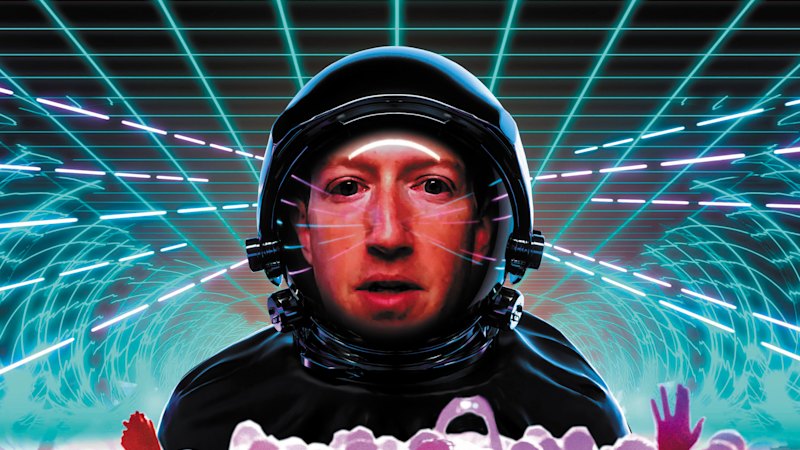
But what Zuckerberg got so spectacularly wrong was the idea that we would ever want to enter the grotesque cartoon-scape he created. Surely we knew what would happen, since an exact precursor had been created some years previously called Second Life.
Loading
For a few months, businesses and media companies rushed into establish a presence in this digital world. But they left almost as quickly and, before long, Second Life was soon populated largely by predators, spammers and trolls, earning itself the nickname “Sadville”.
Within a year of the launch of the Metaverse, it was obvious that Zuckerberg had succeeded only in creating Sadville 2 – even Meta’s own staff didn’t want to use it.
Zuckerberg imagined that we’d want to attend virtual meetings as crude avatars. But while admittedly most internal corporate meetings are unnecessary, our physical presence when meeting business partners or competitors really does matter. Charm and empathy – two characteristics alien to many Silicon Valley CEOs – cannot be effectively conveyed in cartoon form.
It didn’t help that the Metaverse was riddled with bugs, and odd design decisions. To begin with, only the upper half of the body of your avatar could move, as moving legs were not thought an important enough feature to include. You had to wave your arms around to emote. When Zuckerberg posted a bizarre video of his cartoon self jumping and dancing, it turned out to have been faked.
The bizarre nature of meeting in the Metaverse was captured in a 2021 Financial Times interview with Nick Clegg, Meta’s then vice president of global affairs: “‘Can we get the sneering and mockery out of the way?’ says the avatar. Sadly not because he doesn’t have any trousers on. Neither do I. We don’t even have legs.”
But don’t cheer the demise of the Metaverse too soon, for what Zuckerberg has planned next is even more disturbing. And unlike Sadville Mark Two, it will affect you even if you never use it yourself.
Last week Meta acquired Limitless, a company that makes a wearable artificial intelligence (AI) device that silently records us and chimes in with summaries and suggestions.
Limitless chief executive Dan Siroker enthused about Meta’s “new vision to bring personal superintelligence to everyone” using “incredible AI-enabled wearables”. OpenAI has brought Sir Jonny Ive’s company to create something similar: a talking trinket.
The problem is, people don’t like being recorded without their permission or having their private thoughts stored and analysed in the cloud. Google spent a fortune finding this out the hard way with its own AR spectacles. Released to the public in 2014, Glass was a personal project of co-founder Sergey Brin. But before long, wearers of the devices were being attacked in bars as the prospect of being recorded provoked people.
Loading
Meta seems not to have learnt from this, developing its own spectacles, called Orion, in the confidence that it can turn us all into spies and snitches. As they move into stratospheric tiers of wealth and isolation, Silicon Valley’s elite seem to forget that personal and social boundaries are important back here on Earth.
The irony is that, with their odd fantasies and apparent determination to make Black Mirror a reality, tech bosses are really holding back the technology from the interesting things it can do.
I’ve always found VR to be great fun; give the technology to creative people, and they’ll devise new games people can play. It’s natural for team competitions such as LaserQuest, or escape rooms. There are decent markets here.
“Aut Zuck aut nihil,” Zuckerberg wore on a recent T-shirt, a pun on Caesar’s aut Caesar aut nihil: either Zuckerberg or nothing. But investors are not obliged to make such a stark choice.
To make the most of the technology, one day they will decide they prefer someone else. When they do, they may look back at the failed Metaverse experiment as the first sign of Zuck losing his touch.
The Telegraph, London
The Market Recap newsletter is a wrap of the day’s trading. Get it each weekday afternoon.
About the Author


