
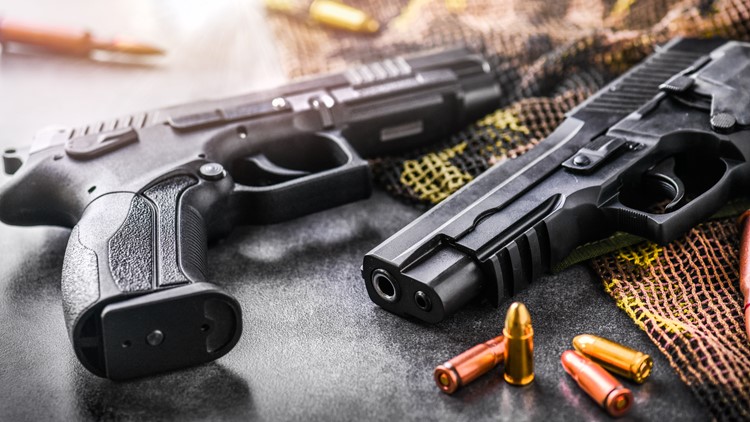
Advocates urge North Carolina schools to reject a law allowing armed volunteers on campus, fearing it endangers children more than it protects.
CHARLOTTE, N.C. — While most parents were packing lunches and checking homework Monday morning, Jennifer Hixson was driving two hours to the state capitol, hoping to draw attention to a new law she fears could put children in danger.
The law, which took effect on Monday, allows North Carolina private schools to arm teachers, parents, or approved volunteers with concealed weapons, creating their own version of security to prevent school shootings. But Hixson and other gun safety advocates are urging schools not to adopt the policy, warning that minimally trained volunteers carrying firearms around children could introduce more danger than protection.
“I understand people’s concerns about security, but I never think more guns are the answer,” Hixson said. “I’m looking at a minimally trained volunteer, not someone who has gone through role plays, just a volunteer carrying a gun around my child and I am not comfortable with that.”
House Bill 193 became law in July after Republican lawmakers overrode Democratic Gov. Josh Stein’s veto. The measure allows private schools to permit employees and volunteers to carry concealed weapons on campus.
Rep. Jeff McNeely, who introduced the bill, said private schools in his district struggle with security costs and the law represents common sense legislation protecting Second Amendment and private property rights.
The law requires armed individuals to have written authorization from the school’s board of trustees or administrative director, hold a valid concealed handgun permit and complete eight hours of annual training in gun safety and appropriate firearm use.
But critics say the requirements don’t go far enough.
Becky Ceartas, executive director of North Carolinians Against Gun Violence, raised concerns about how law enforcement would distinguish between an armed volunteer and an active shooter during an emergency.
“When law enforcement does show up to the scene if it’s an active shooter situation, how are they supposed to know who the active shooter is versus who is this person who’s gotten written permission?” Ceartas said.
Ceartas also warned about patterns her organization has documented, including misplaced guns, accidental discharges and weapons stolen from bags or desks in school settings where staff or volunteers carry firearms.
“If we’re looking at making investments, we need look at investing in mental health professionals, perhaps extra screening to make sure kids are not bringing guns into the school,” Ceartas said.
Private schools are not required to adopt the policy. Schools that choose to allow concealed weapons must establish written standard operating procedures and share them with parents annually.
Hixson is encouraging parents to take action before their schools make decisions.
“You need to call your school, you need to ask what is your policy, what are you planning to do,” Hixson said.
For many parents, the new law represents not just a policy change but a new source of worry, she said. The law may have taken effect, but the fight to protect children’s safety is far from over.
Multiple private schools in the Charlotte area did not respond to requests for comment about whether they plan to adopt the policy.
Mental health professionals have also expressed concerns about the emotional impact on students.
“The safety of our students is paramount,” said Aniesha Jackson, a school counselor. “I do understand that this law is well-intentioned, however, it just might create more obstacles down the road than you anticipate when it comes to children’s emotional and mental wellness.”
Lisa Crawford with Moms of Murdered Offspring said decisions about arming school personnel will send ripple effects through entire communities.
“I hope no teacher, parent, volunteer, or anybody ever has to be faced with making a decision like that,” Crawford said.
About the Author


