
Ukraine is helping to reduce supply with its intensified targeting of Russian production infrastructure, refineries and tankers.
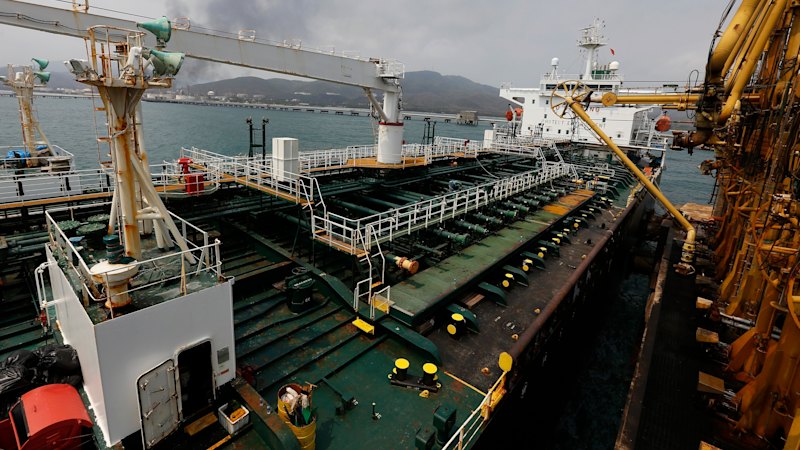
With Indian refiners, in particular, leery of buying Russian oil, there’s a lot of oil now floating around the world in tankers, looking for a market.
Loading
According to trade intelligence firm Kpler, there’s currently about 1.3 billion barrels of “oil on water” – the most since the pandemic – and the amount of oil stored on tankers for more than 120 days is, at 51 million barrels, the most since mid-2023.
Seaborne Russian oil in transit and searching for buyers last week accounted for about 155 million barrels, or more than 50 per cent more than was the case at the start of this year. That oil will eventually find buyers, but at what price?
Despite the effective reduction in Russian supply, and some initial impact on supply from the US actions against Venezuela, the overall market is still being driven by an excess of supply over demand. This is thanks to the OPEC+ cartel bringing back significant volumes this year that had previously been taken from the market as the cartel tried to put a floor under the price.
Loading
The International Energy Agency now estimates that there will be a surplus supply of about 3.85 million barrels a day next year. It’s the oil glut that is blunting the impact of reduced Russian and Venezuelan demand and allows US President Donald Trump to ramp up the pressure on Venezuela’s Maduro government without any concern that it will drive up prices.
Trump has used Venezuela’s probably non-existent role in the fentanyl trade as the pretext for his probably unlawful destruction of Venezuelan boats (which may, or may not, be carrying drugs other than fentanyl that are destined for eventual delivery to markets other than the US) and for his blockade of Venezuelan ports.
There’s a lot of oil floating around the world in tankers looking for a market.
In reality, the administration is trying to force regime change in Venezuela and to get its hands on Venezuela’s proven oil reserves, the world’s largest. Oil generates about 95 per cent of Venezuela’s export revenues.
Loading
Trump has said the blockade will continue “until such time as they return to the United States all of the oil, land, and other assets that they stole from us”. American companies dominated the oil industry in the country, which produced more than 3.2 million barrels a day in the early 2000s, before Hugo Chavez’s government nationalised their operations.
While the industry has been severely degraded and its output has plummeted since all the US companies other than Chevron were forced out and the US sanctions impacted its reliance on US technology, the Trump administration obviously believes it could be regenerated under US ownership and control.
Increased production from Venezuela and a peace deal between Russia and Ukraine that unlocks the Russian supply now drifting aimlessly in international waters would presumably drive global oil prices down further.
That would have the presumably unintended effect of undermining the economics of shale oil production in the US, which is currently at record levels but being challenged by the low prices.
Breakeven prices for US onshore producers range from $US35 to $US40 a barrel for the most efficient producers in the most productive basins to $US60 a barrel or more for others.
If prices remain at current levels through 2026 and beyond, as the IEA expects, US production volumes will fall and domestic prices may well rise despite the global glut. The West Texas Intermediate price is below $US59 a barrel at present.
A flood of Venezuelan oil into the US – the US, mainly thanks to Chevron, imports about 160,000 barrels a day from Venezuela – could eventually threaten to further undermine the economics of the industry that has powered the US into its relatively recent role as the world’s largest oil producer, although it would take years to rebuild the industry’s infrastructure, capabilities and production volumes.
In a different environment, what’s happening to the Russian and Venezuelan oil exports would have shaken the oil market and driven prices up.
The oil glut generated by OPEC+’s conclusion that its rationing of production was causing more harm than good for its members (some of whom weren’t complying anyway) has, however, overwhelmed their impact on the market.
The Business Briefing newsletter delivers major stories, exclusive coverage and expert opinion. Sign up to get it every weekday morning.


