
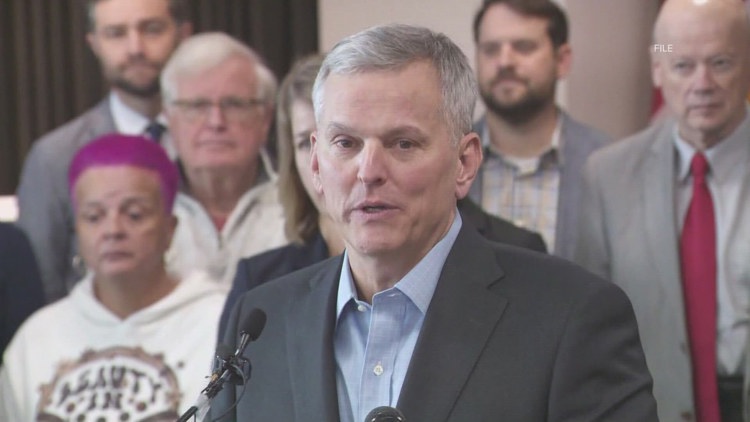
Stein said the ruling denies students their constitutional right to a “sound basic public education”.
NORTH CAROLINA, USA — The North Carolina Supreme Court on Thursday dismissed the long-running Leandro school funding case, a decision Gov. Josh Stein sharply criticized for leaving students without relief.
Stein said the ruling denies students their constitutional right to a “sound basic public education” and departs from precedent established over decades of litigation.
In a 4-3 decision, justices said courts cannot force state education funding, leaving future school funding decisions to lawmakers. This ruling will reshape how public schools will be funded across the state.
“Education opens doors of opportunity for children, but today the court slammed them in the face of students who deserve the right to a sound basic public education,” Stein said. “The Supreme Court simply ignored its own established precedent, enabling the General Assembly to continue to deprive another generation of North Carolina students of the education promised by our Constitution.”
The Leandro case began in 1994, when several low-wealth school districts sued the state, arguing that lawmakers were failing to provide adequate funding for public education. In 1997, the Supreme Court ruled that the state constitution guarantees every child a “sound basic education,” a right later interpreted to include competent teachers, effective school leadership, and sufficient resources and facilities.
Over the years, courts have repeatedly found gaps in state funding, particularly in under-resourced districts, and in 2019 ordered a multibillion-dollar comprehensive plan to improve schools. Implementation, however, has been stymied by disagreements between the courts and the North Carolina General Assembly over whether judges can compel spending.
Stein criticized the legislature’s education funding, noting that recent budgets have left North Carolina near the bottom nationally in per-pupil spending and teacher pay. “Four Supreme Court justices believe that is okay, but they are wrong,” he said. “Their decision is contrary to the plain language of our Constitution and the court’s past rulings.”
Despite the dismissal, Stein said his administration will continue advocating for higher teacher pay, additional school support staff, expanded student programs, and broader investments in public education. “Our children are our future, and it’s long past time we invest in them,” he said.
Sen. Phil Berger also released a statement praising the decision.
For decades, liberal education special interests have improperly tried to hijack North Carolina’s constitutional funding process in order to impose their policy preferences via judicial fiat. Today’s decision confirms that the proper pathway for policymaking is the legislative process.
Today, North Carolina’s children have access to world-class educational opportunities because of the legislature’s commitment to improving educational outcomes. As we prepare for the short session, Senate Republicans will continue our ongoing focus on increasing parental involvement and educational opportunities for students.
Since 2011, the Republican-led General Assembly has worked to ensure that our state’s schools prioritize student outcomes that prepare the next generation for life outside academia. In doing so, we’ve reformed how core subjects are taught, substantially increased funding, and created pathways for all students to attend a school that best meets their needs.
The North Carolina State Board of Education chair Eric Davis and North Carolina superintendent of Public Instruction Maurice “Mo” Green released a joint statement saying they were reviewing the decision in full.
“Today, the Leandro case was addressed again by the North Carolina Supreme Court in a lengthy opinion exceeding 240 pages,” the statement read. “Given the scope and complexity of the decision, we are carefully reviewing it in full, including consultation with our legal counsel, to understand its implications for our public schools, students, and educators.
While we take the necessary time to review the court’s opinion, one thing remains clear: every measure we have seen over time demonstrates that North Carolina’s public schools have been chronically under-resourced. Ensuring that our children receive the education they deserve is not just a constitutional responsibility; it is a moral and economic imperative for the future of our state.
At the same time, we are incredibly proud of what our students and educators are accomplishing despite these challenges. In 2025, North Carolina reached historic highs in graduation rates, participation in advanced coursework, and career and technical education. Notably, 54% of our public high school graduates last year successfully completed a college-level course while in high school. This is an extraordinary and historic achievement that reflects the dedication, talent and resilience present in classrooms across our state.
Our educators and students continue to pursue educational excellence, even in the face of resource constraints. They are doing their part. Now, we must ensure that our systems and investments match their efforts.
We remain committed to working with all partners to support strong public schools and to ensure that every child in North Carolina has the opportunity to succeed in our public school system.”
About the Author


