
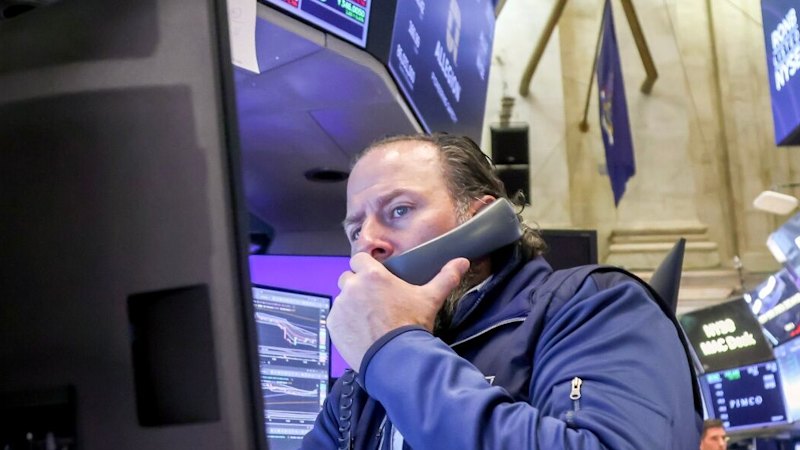
Northrop Grumman also slid 5.5 per cent and Lockheed Martin lost 4.8 per cent after Trump said he would not permit dividends or stock buybacks for defence companies until they fix problems with the production of military equipment. He didn’t mention specific companies.
Nvidia and Microsoft rose about 1 per cent each, and Alphabet rose more than 2 per cent as investors shifted back into AI stocks following recent worries they were overvalued.
“Investors have come into 2026 with a similar playbook to last year: Buy tech and forget about it. Rumors that the AI trade was done turned out not to be true,” said Jake Dollarhide, chief executive officer of Longbow Asset Management in Tulsa, Oklahoma.
Moves across the rest of the US stock market were mostly quiet, including for Warner Bros Discovery after it again rejected a buyout bid from Paramount and told its shareholders to stick with a rival offer from Netflix. Warner Bros rose 0.3 per cent, while Paramount Skydance fell 0.9 per cent and Netflix added 0.1 per cent.
In the oil market, crude prices fell after Trump said that Venezuela would provide 30 million to 50 million barrels of oil to the United States. A barrel of benchmark US crude dropped 2 per cent to $US55.99. Brent crude, the international standard, fell a more modest 1.2 per cent to settle at $US59.96 per barrel.
Any additional oil flowing from Venezuela into the global system would push down on crude prices by increasing their supplies. Prices for oil have swung this week following Trump’s weekend ouster of the president of Venezuela, which is likely sitting on some of the largest deposits of oil in the world.
Oil prices had already fallen back to where they were in 2021, before Trump’s move against Venezuela, because of expectations of plentiful supplies. To pull much more oil from Venezuela’s ground would likely require big investments to improve ageing infrastructure.
Loading
In the bond market, Treasury yields swung following several mixed reports on the US economy. One of the most impactful said that growth for US retailers, finance companies and other businesses in the services sectors accelerated by more last month than economists expected.
Separate reports on the US job market offered a mixed view. One said that employers cut back on the number of job openings they were advertising, while a second suggested that employers outside of the government added 41,000 more jobs last month than they cut. A much more comprehensive look at the health of the US job market will arrive on Friday.
The yield on the 10-year Treasury fell to 4.13 per cent from 4.18 per cent late on Tuesday following Wednesday’s economic reports. But the two-year yield, which more closely tracks expectations for what the Fed will do, held steadier. It edged down to 3.46 per cent from 3.47 per cent from late Tuesday.
The hope on Wall Street is that the economy remains solid enough to avoid a recession but not so strong that it keeps the Fed from cutting interest rates. The Fed cut its main interest rate three times last year to shore up the slowing job market, but it’s indicated fewer cuts may be ahead because inflation remains high.
Traders are betting on a less than 12 per cent chance that the Fed will cut interest rates at its next meeting later this month. That’s down slightly from the day before, according to data from CME Group.
In stock markets abroad, indexes were mixed among some sharp moves across Europe and Asia.
with AP and Bloomberg


