
The Canadian Paediatric Society is recommending cholesterol screening for all children between two and 10 years old.
A position statement released by the society on Friday says atherosclerosis — the buildup of plaque, which includes cholesterol, in the arteries — starts in childhood and is a key driver of heart disease and stroke.
The statement’s lead author, pediatric cardiologist Dr. Michael Khoury, says about one in 300 Canadians have high cholesterol caused by a genetic condition called familial hypercholesterolemia (FH).
He says universal screening with a blood test would allow doctors to identify the condition early and begin treatment, including changes to diet and physical activity.
Treating the condition in childhood can prevent cardiovascular illness from appearing in adulthood, says Khoury, who specializes in preventive cardiology at the Stollery Children’s Hospital and the University of Alberta in Edmonton.
He says without universal screening, doctors are missing about 95 per cent of children who have FH because children don’t tend to have any symptoms.
Dr. Alykhan Abdulla, a family doctor in Manotick, Ont., agrees there’s a lot of value in screening and preventative treatment.
“We have to start moving away from disease care, where we look after people who are sick … we need to move further upstream in areas of preventative health care,” he said.

However, he worries about the impact any new screening would have on resources. Getting thousands of children scheduled for blood tests and having proper follow-up would strain an already stretched system, he said.
“[And] if we find these things — three-, four-, five- thousand new people, young children who have high cholesterol — we have to get them fitness help, dietetics help,” said Abdulla.
“Those things will be resource heavy, but they’ll be things that we should invest in.”
What causes FH?
FH is most commonly caused by a mutation in the low-density lipoprotein cholesterol (LDL) receptor on the liver. The mutation prevents LDL cholesterol — often called “bad” cholesterol — from getting into the liver, so it accumulates in the blood, says Khoury.
It also causes the liver to detect a “low cholesterol environment” and ramp up cholesterol production.
LDL cholesterol, along with fat and other substances, is a major component of plaque that builds up in the arteries and limits blood flow to the heart and brain.
If a child tests positive for FH, they are often referred to a pediatric lipid specialist like Khoury to monitor the levels of LDL cholesterol and begin treatment as needed.
Edmonton resident Mike Heathcote found out at a young age that he had high cholesterol, but it wasn’t until he was older that doctors discovered he had the genetic mutation for FH.
Knowing there’s a chance of passing it on, he had both his son and daughter tested and found out they also had the condition.

“They had a healthy, active lifestyle, just normal kids. If you didn’t do the test, you never would have known,” he said.
By catching it early, Heathcote was able to get his kids on medication.
“The hope is that over time it will be like this was never an issue for them. Their arteries will be fine, there’s no long-term lasting damage,” he said.
His 15-year-old daughter, Haley Heathcote, says she’s grateful her FH was caught early.
“It’s as simple as a prick in the arm and you can be saving your life,” she said, referring to the blood test required to screen for FH.

Medications for kids ‘far outweigh the risks,’ doctor says
Long-term safety data has shown that statin medications commonly used to treat high cholesterol in adults can be given to children who are eight years old and above, often in lower doses, says Khoury.
“The benefits of using these medications far outweigh the risks,” he said.
And researchers have followed children on such medication, showing their risk for heart issues later on in life decreased.
“When you follow these children up 20 years later, you can normalize their cardiovascular risk and if we treat them adequately, remove the likelihood that they’re at a substantially increased risk for having an early heart attack or stroke when they’re in the prime of their lives,” said Khoury.
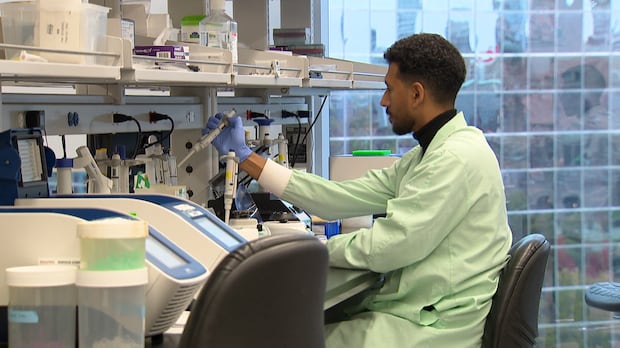
The Princess Margaret Cancer Centre says it will be running a genomic study on up to 100,000 people in Ontario over the next five years, screening for genetic conditions that increase the risk of hereditary cancers and a condition tied to high cholesterol and heart disease.
The guidance to do cholesterol screening between two and 10 years of age is meant to give primary-care physicians as many chances as possible to do the blood test, even though treatment with medication likely wouldn’t begin until age eight.
Usually the child will stay on the medication for the rest of their life.
The American Academy of Pediatrics currently recommends all children have cholesterol tests between nine and 11 years of age.
But pediatricians in the U.S. may recommend screening as early as age two if they have significant risk factors, including high blood pressure, obesity or diabetes, a known family history of FH, or a parent or grandparent with heart or cholesterol problems, the organization said.
Family doctors and pediatricians in Canada haven’t had a clear set of recommendations until now, according to Khoury.


