
Sometimes, we hear it and see it with our own ears and eyes in large crowds at stadiums, where individuals blend into masses and thus escape scrutiny for words and actions that, again, they wouldn’t say or do on their lonesome.
Sometimes, it’s a little more pervasive.
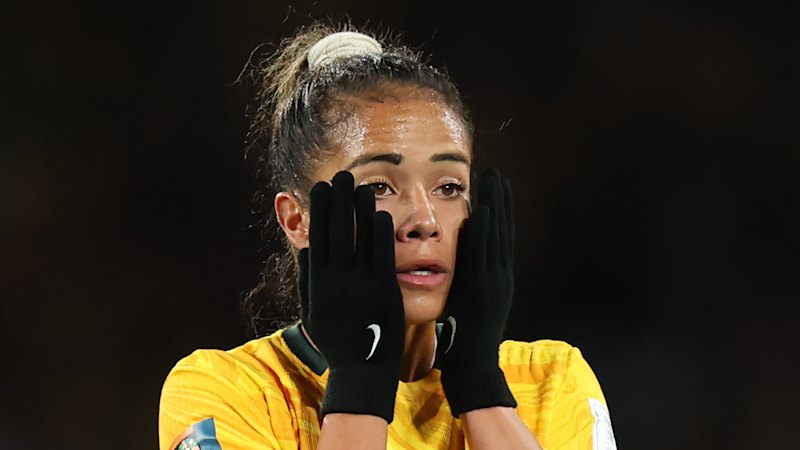
In her book, Bloom, Matildas star Mary Fowler does not use the words “racism” or “racist” even once. She chooses her language carefully. Clearly, though, this is the topic on her mind as she writes about her departure from French club Montpellier, and the time she and a black teammate were given bananas in lieu of flowers by their colleagues.
The banana, of course, was corruptly co-opted as a symbol of racist abuse a long time ago. They’ve been thrown onto sporting arenas, in Australia and abroad, for many years, the implication being that the recipient is a monkey, or similar, and therefore somehow less than human. It’s possible that whoever gave Fowler the bananas wasn’t trying to make this connection, but as Fowler says, it’s difficult to reach any other conclusion.
Whose problem is this to solve? Society has tried and failed. Sport has tried and failed. Is there a particular slogan, armband, campaign, policy or social media tile that will crack the case, once and for all? No.
Loading
The fight against racism feels, increasingly, like a hopeless war of attrition, an impossible battle that we kind of have to fight anyway, because admitting defeat would be even worse.
So credit to Fowler. She’s thought long and hard about these issues, and it’s a good thing that she’s prepared to speak openly about them. That’s brave.
Her modest intentions, though, are worth noting: she seeks to help others who happen to find themselves in similar positions, as opposed to hoping that anything will be “fixed” in other people.
Nothing will probably change. But what else do you do?


