
The suspect in Friday’s stabbing had already been banned from the light rail.
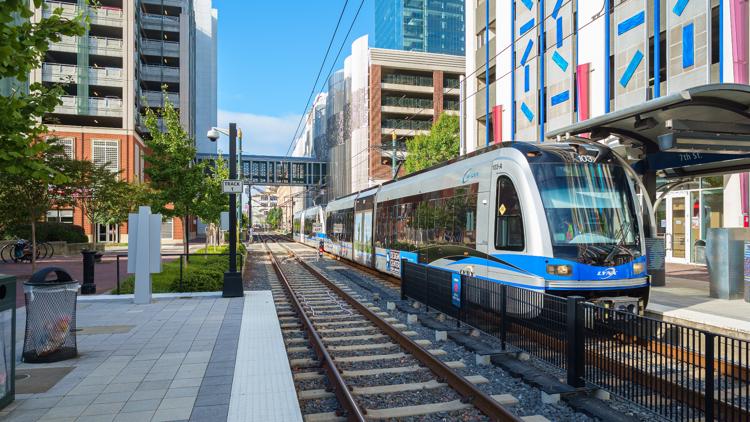
CHARLOTTE, N.C. — In an exclusive interview with WCNC Charlotte, Mayor Vi Lyles said the city’s light rail system may need to move away from its open platform design in response to Friday’s stabbing.
Oscar Solorzano is charged with attempted first-degree murder, assault with a deadly weapon inflicting serious injury, breaking and entering of a motor vehicle, carrying a concealed weapon and intoxicated and disruptive in connection with the Dec. 5 attack.
Police say he was drinking alcohol on the light rail and yelling at passengers Friday night. He is accused of stabbing a man who was trying to intervene.
Solorzano has already banned from the rail, and two months ago, he was found with a knife at a light rail station.
The Blue Line light rail currently operates with an open platform system, allowing riders to board trains without ticket checks at entry points.
Lyles said this may need to change, as the city is preparing to take next steps to build the red line commuter rail.
“We need to revisit. If we’re going to build new transit lines, and we’re going to build one because we’ve committed that to the northern towns, we’re going to have to build one that is already planned as a safe space to be,” Lyles told WCNC Charlotte’s Ben Thompson.
When asked whether that would include retrofitting existing Blue Line stations, Lyles said: “I don’t know if we’ll be able to do that, but we really are diving deeply into that conversation, and there will be some kind of assessment there.”
At Monday night’s council meeting, Mayor Lyles called on CATS to provide a security update, which councilmembers expect to receive this week The city already increased security measures in October, months after the fatal stabbing of Iryna Zarutska in August.
Interim CATS CEO Brent Cagle announced initial security changes in October following Zarutska’s death. The measures included the security contractor doubling personnel from 108 to 219 officers, adding UTV and bike patrols, and increasing fare evasion checks.
However, Cagle said in October that placing officers on every single train is not feasible.
“It’s not about: are there personnel on every vehicle, every day, all day long? It’s about are there personnel visibly present throughout the entire system, always throughout the day,” Cagle said during the announcement.
Some riders have reported that fare evasion checks have not been consistent.
Councilmember Dimple Ajmera said closing off platforms could represent another significant but necessary expense.
“Mr. Cagle said that he’s open to exploring, how do we hardwire our infrastructure so people with tickets can only be led into the system,” Ajmera said “The transit authority will have further discussion on that, because that is going to cost significant amount of money.”
The decision will likely fall to the MPTA, the new transit authority board required to be formed after the Mecklenburg County transit sales tax increase passed, when it takes over in January.
Multiple council members have called on the North Carolina General Assembly to pass a budget that will provide funding assistance.
Contact Julie Kay at juliekay@wcnc.com and follow her on Facebook, X and Instagram.
For the latest breaking news, weather and traffic alerts that impact you from WCNC Charlotte, download the WCNC Charlotte mobile app and enable push notifications.


