
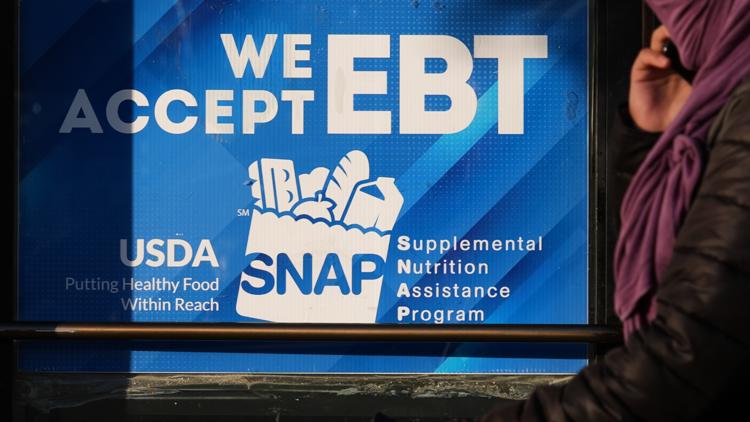
The USDA plans to resume food assistance for millions, but only at about half the usual amount. Here’s how much households can expect and when.
WASHINGTON — The Supplemental Nutrition Assistance Program (SNAP), which supports about 42 million Americans each month, is set to partially resume after weeks of uncertainty during the federal government shutdown.
A new legal filing by the U.S. Department of Agriculture (USDA) says about half of the normal benefit amount for November will be paid by tapping into the around $4.65 billion contingency fund. The rollout may face delays, leaving many families unsure about when they will see funds. Here’s what to know.
When will SNAP benefits start going out again?
Families in some states may not see their November benefits for some time.
The USDA told a federal court it will issue guidance to states on the partial payments.
States had already stopped processing November benefits after the USDA sent an Oct. 10 letter instructing them not to issue payments during the shutdown. States typically send enrollee data to vendors days or weeks before the new month so funds can be loaded onto EBT cards. That process now has to be restarted and adjusted for the reduced amounts.
Processing time “will take anywhere from a few weeks to up to several months,” USDA official Patrick Penn said.
How much will households receive?
For November, households are expected to receive about half of their normal SNAP benefits..
Court documents say the $4.65 billion from the contingency fund will be “obligated to cover 50% of eligible households’ current allotments” for the month.
Exact amounts will vary by household and state. The average monthly benefit is usually about $190 per person.
Why are only half payments going out?
Federal judges ruled that USDA’s decision to halt SNAP payments during the shutdown was likely unlawful and that the agency must use its contingency fund to keep benefits going at least partially.
While the contingency fund is worth $4.65 billion, a normal month of SNAP benefits costs over $8 billion, so the fund is not large enough to cover full payments.
But the administration told the courts it decided not to pull about $4 billion from other sources to make full November payments.
Officials said they did not want to tap a separate pot of leftover tariff revenue that funds child nutrition programs, such as school meals, arguing that shifting billions to SNAP for one month would lead to “an unprecedented and significant shortfall.”
In the filing, USDA officials also warned that the depletion of the contingency fund would mean “no funds will remain for new SNAP applicants certified in November, disaster assistance, or as a cushion against the potential catastrophic consequences of shutting down SNAP entirely.”


