Kerala, often called God’s Own Country, is renowned for its backwaters, beaches, hill stations, and rich cultural heritage. While the state is dotted with temples, palaces, synagogues, and colonial buildings, one monument stands out as the most iconic of all: the Padmanabhaswamy Temple in Thiruvananthapuram. Revered for its history, architecture, wealth, and spiritual significance, this temple has become a global symbol of Kerala’s heritage and a landmark that defines the state’s cultural identity..
1. A Monument with Unmatched Global Recognition
While Kerala has many celebrated structures—such as the Mattancherry Palace, Bekal Fort, and the Santa Cruz Basilica—none have achieved the same global visibility as the Shree Padmanabhaswamy Temple. The temple captured the world’s attention in the last decade after reports surfaced of treasure worth billions of dollars found in its underground vaults. This catapulted it into international news, and it became widely recognized as one of the richest temples in the world.
However, its fame is not merely about wealth. The temple is a living, breathing representation of Kerala’s spiritual, artistic, and royal legacy.
2. Historical Legacy: A Temple of Kings and Devotees
The temple’s history stretches back more than a thousand years. Early references are found in Sangam literature, suggesting that the shrine existed in some form even before the 8th century CE. Over time, the temple grew under the patronage of the Cheras, Travancore rulers, and various local chieftains.
Travancore Royal Connection
The most defining contribution came from the Travancore royal family, who ruled Kerala’s southern regions for centuries. In 1750, Maharaja Marthanda Varma famously dedicated the entire kingdom of Travancore to Lord Padmanabha in a ritual known as “Thrippadi Danam.” From that moment onward, the kings of Travancore ruled as “Padmanabha Dasa”—servants of the deity.
This deep connection between state governance and temple devotion makes Padmanabhaswamy Temple more than a religious site; it is intertwined with Kerala’s political and cultural development.
3. Architectural Significance: A Masterpiece of the Kerala–Dravidian Style
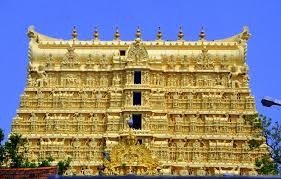
The temple is also iconic because it showcases a unique architectural blend—Kerala’s traditional style fused with Dravidian influences, a result of cultural exchanges with Tamil kingdoms.
Key Architectural Highlights
• The Magnificent Gopuram
The towering 100-foot seven-tiered gopuram (gateway tower) is one of the temple’s most striking features. Decorated with intricate carvings, it dominates the Thiruvananthapuram skyline and serves as the ultimate symbol of the city.
• The Sanctum Idol: An Engineering Marvel
The idol of Lord Padmanabha is one of the largest of its kind. It depicts Vishnu in the Anantha Shayana posture, reclining on the serpent Anantha with:
- One door showing the head and shoulders
- A second door showing the torso
- A third door showing the feet
Visitors cannot see the idol all at once; instead, they view it through three separate doorways. This unusual design enhances the deity’s mystical aura and showcases ingenious temple layout planning.
• Murals and Stone Sculptures
The temple walls are adorned with elaborate murals, some dating back centuries, featuring mythological scenes, floral motifs, and depictions of Vishnu’s avatars.
• The Golden Mandapam
One of the temple’s standout features is its gold-covered interiors, pillars, and ceremonial structures that reflect the opulence and craftsmanship of Kerala’s past.
4. Spiritual and Cultural Importance
Padmanabhaswamy Temple is not just a monument but a cultural foundation for Kerala. It represents:
• One of the 108 Divya Desams
The temple is among the 108 holy Vishnu temples mentioned in Tamil Vaishnavite literature. Pilgrims from across India, especially Tamil Nadu and Karnataka, visit to seek blessings.
• A Center of Festivals
Major festivals associated with the temple—such as Laksha Deepam, Navaratri, and Painkuni Festival—turn Thiruvananthapuram into a cultural hub filled with rituals, processions, music, dance, and traditional lamps.
• Traditional Arts and Rituals
The temple has preserved centuries-old rituals, percussion arts like Panchavadyam, classical dances, and Vedic chanting traditions. These practices keep Kerala’s intangible cultural heritage alive.
5. The Legendary Vaults: A Mystique That Adds to Its Fame
One of the reasons the temple is so iconic is the mysterious underground vaults (known as Vaults A to F) discovered during a Supreme Court-monitored inspection in 2011.
Inside these vaults, treasure worth unimaginable value was found, including:
- Gold idols
- Royal jewelry
- Precious stones
- Antique coins
- Gold ornaments and ceremonial items
One vault (Vault B) is traditionally believed to be forbidden from opening due to religious and mystical reasons. Legends surround the vault, from claims of supernatural protection to beliefs that opening it would bring misfortune.
This mysterious aura elevated the temple from a heritage site to a global marvel shrouded in intrigue.
6. A Symbol of Kerala’s Identity
The Padmanabhaswamy Temple is more than a structure—it is an emblem of Kerala’s rich past, artistic heritage, and living traditions. It reflects:
- The state’s connection to spirituality
- The architectural intelligence of ancient Kerala builders
- The historical importance of the Travancore kingdom
- Kerala’s ability to preserve ancient culture while embracing modernity
The temple is featured on:
- Tourism brochures
- Documentaries
- Travel films
- State cultural promotions
It has become the face of Kerala’s heritage tourism.
7. Why Other Monuments Don’t Surpass Its Iconic Status
Kerala is full of impressive monuments:
- Bekal Fort – one of India’s most scenic seaside forts
- Mattancherry Palace (Dutch Palace) – famous for murals and colonial history
- Paradesi Synagogue – oldest synagogue in Commonwealth countries
- St. Francis Church, Kochi – where Vasco da Gama was once buried
- Padmanabhapuram Palace – a wooden architectural masterpiece
While each is culturally rich, none combines global fame, spiritual significance, royal heritage, architectural magnificence, and mystery quite like the Padmanabhaswamy Temple.
Conclusion
The Shree Padmanabhaswamy Temple is undoubtedly the most iconic monument in Kerala, revered not just for its religious significance but also for its immense historical, architectural, and cultural value. Its grandeur, deep royal ties, unique artistic elements, and legendary hidden treasures make it a monument that captures the imagination of people worldwide.