
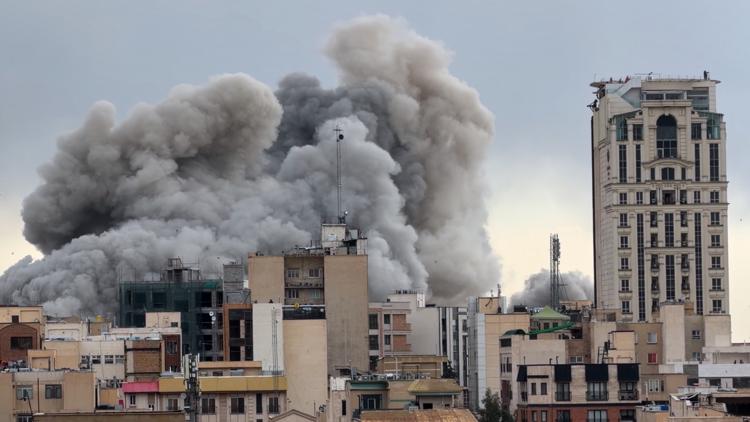
Secretary of War Pete Hegseth insisted that the U.S. strikes were not going to be another “endless war” like the U.S.-led invasion of Iraq from 2003 to 2011.
IRAN, — The United States and Israel’s surprise military strikes on Iran over the weekend have killed hundreds and have increased the possibility of a multi-national war. But until Monday morning, the reasons for those strikes, and the eventual goal for the U.S. military, haven’t been made clear.
Secretary of Defense Pete Hegseth pointed to newly set military objectives for “Operation Epic Fury” when asked by reporters what the nation’s goals were surrounding the strikes. The Pentagon’s four main objectives included:
- Destroy Iranian offensive missiles
- Destroy Iranian missile production
- Destroy Iran’s Navy and other security infrastructure
- Prevent Iran from having a nuclear weapon
But when pressed about specifics related to how the U.S. would measure these goals and determine when American forces would leave the conflict, Hegseth declined to answer, saying any indication about the intent of American forces would give Iran strategic information.
The last point has also contradicted previous statements made by the president. U.S. President Donald Trump had said an earlier strike on Iran had “obliterated” its nuclear capability, but Hegseth said on Monday that the possibility of the nation obtaining a nuclear weapon was still very real.
Trump has had a self-professed aversion to foreign entanglements for years, especially in the Middle East. Numerous social media posts and videos from the current president have resurfaced in the days following the strikes on Iran, accusing former President Barack Obama of starting wars because he could not negotiate.
The president has since justified joining Israel’s attacks on Iranian leadership by saying the nation posed an unacceptable and imminent risk to U.S. and allied interests. But the president’s closest advisers have been unable to point to any specific threat to the U.S. from Iran that required urgent action and have offered conflicting assessments of the road ahead.
Hegseth insisted that the U.S. strikes on Iran were not going to be another “endless war” like the U.S.-led invasion of Iraq from 2003 to 2011. But he also said the U.S. plans to send more troops and resources to Iran, with the expectation of more American military member deaths.
Behind closed doors, there have been contradictory explanations for the strikes.
Trump administration officials told congressional staff in private briefings Sunday that U.S. intelligence did not suggest Iran was preparing to launch a preemptive strike against the U.S., three people familiar with the briefings said.
The administration officials instead acknowledged there was a more general threat in the region from Iran’s missiles and proxy forces, two of the people said. The third person, however, said the administration emphasized that Iran’s missiles and proxy forces posed an imminent threat to U.S. personnel and allies in the region.
The officials did not provide any clarity about what would happen next in Iran after the joint U.S.-Israeli operation, the two people said. All three people insisted on anonymity to discuss details that have not been made public.
The information conveyed to the congressional staff contrasts with the message from Trump. “Our objective is to defend the American people by eliminating imminent threats from the Iranian regime. A vicious group of very hard, terrible people,” he said in a video message after launching strikes on Iran.
But in a contradiction to the information given to the congressional staffers, Senior Trump administration officials, who like others, were not authorized to comment publicly and spoke on condition of anonymity, told reporters Saturday that there were indicators that the Iranians could launch a preemptive attack.
The Associated Press contributed to this article.


