
But then Popovic left of the eve of the 2017-18 season to take up a job in Turkey, and the philosophical vacuum left behind has never been adequately filled. Rather than protect their ethos, the club continued to allow whoever the coach was to decide who they are, what they do and how they play, to ever-diminishing returns.
They immediately tried to pivot to a possession-based, Spanish-influenced style by appointing Josep Gombau. That didn’t work. Then they went for a famous name in Markus Babbel. That didn’t work. Then they went for … Carl Robinson. That definitely didn’t work. Marko Rudan briefly worked, then didn’t.
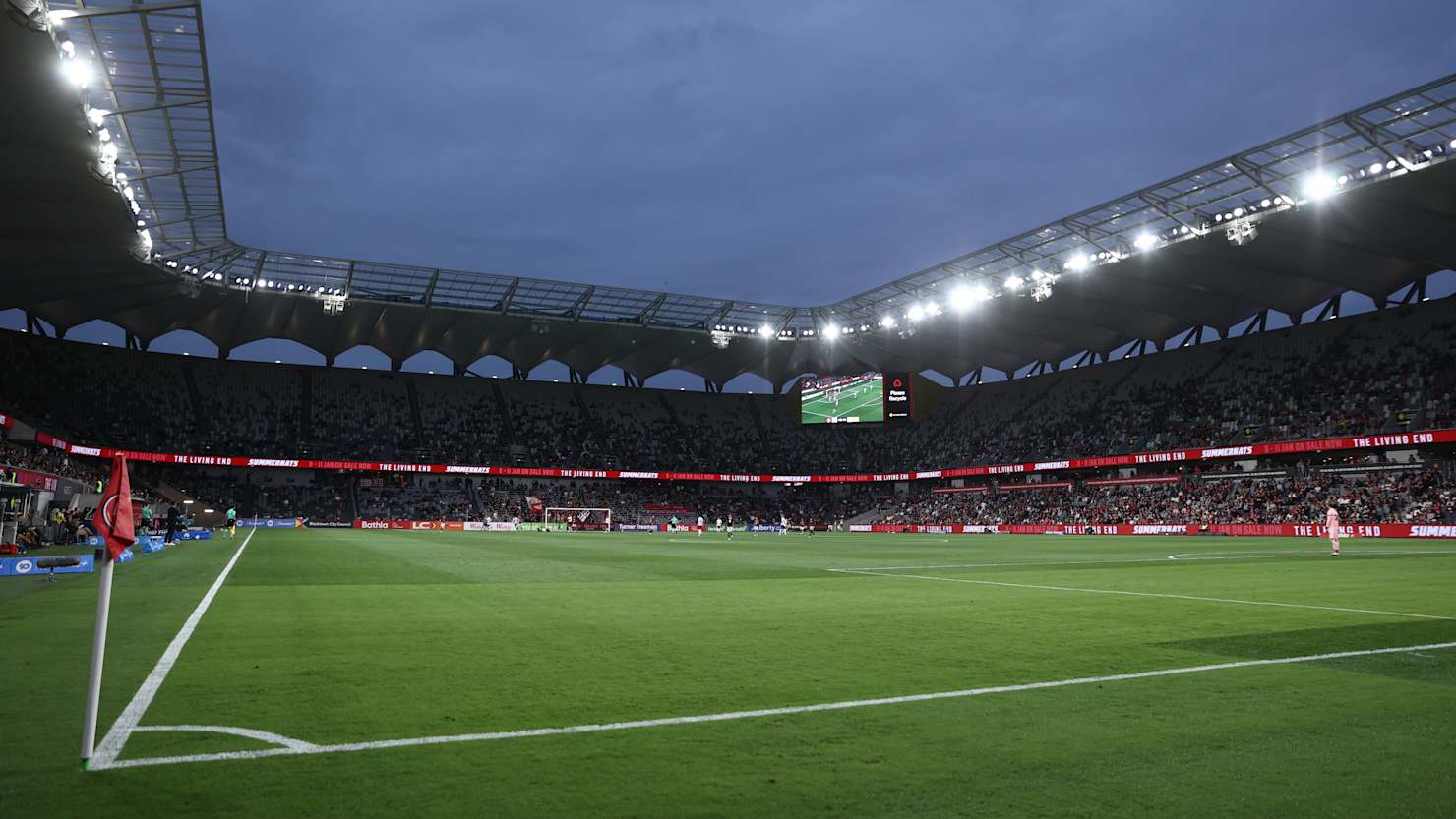
CommBank Stadium is emptier than it ever has been for Wanderers games – and you can’t blame the locals.Credit: Getty Images
Because of the all-too-regular shifts in strategy, each coach left the next saddled with players in their squad on long-term contracts who didn’t necessarily fit with their plans, which made it even harder to start again.
Through all of these miserable seasons, as the Wanderers kept losing, people slowly stopped coming – first the casuals, then the hardcores – and the buzz they’d earned years ago wore off. They are now a shell of their former selves.
Poor old Stajcic is the latest fall guy, and it’s fair enough that he’s had to pay for their terrible season to date with his job.
It just wasn’t working: they’re bottom of the table with three wins from 13, and only 10 goals scored, which is far below what their squad is capable of. Crowds have dropped to all-time lows. It’s been difficult to ascertain exactly what they’ve been trying to achieve on the pitch.

Former Wanderers coach Alen Stajcic.Credit: Getty Images
But the problems are bigger than one coach of one team. The Wanderers’ women’s team is also last; they’ve played finals once in 13 seasons, and feel like an afterthought to the club.
Their academy, despite sitting on arguably Australia’s richest pipeline of talent, is not firing. There is misalignment across the board, and too many horror stories of good operators who have walked into their Rooty Hill HQ and walked out shaking their heads at the toxicity of the environment and political skulduggery behind the scenes.
For a club this important to have been so bad for so long, it’s not just a western Sydney problem – it’s an Australian soccer problem.
Wanderers chairman Paul Lederer and the other investors who have poured millions into the joint should be credited for their contributions to the game. But whatever advice they’ve been receiving on how to run a football club, whatever they’ve been trying to do, they haven’t delivered.
Loading
Something, therefore, has to change for the outcome to change, and it can’t be just the coach. The evidence is in, and it’s overwhelming.
Gary van Egmond will reportedly take over from Stajcic as interim boss. Whoever comes next, though, will be set up to fail unless there is better guidance from above, ideally in the form of a sporting director, who is properly empowered to define the way they want to play across the board – men’s, women’s, juniors – and let that dictate which coaches they hire, players they sign and how they run their academy.
But they keep on making the same mistakes. Last week, they signed Hiroshi Ibusuki, the veteran Japanese striker who proved himself a capable A-League goalscorer at Adelaide United and Western United. He could be the missing piece in their attack – but they signed him on an 18-month contract, which means Stajcic’s successor will be saddled with a very specific kind of forward next season, who may not necessarily fit with how they want to play.
A coherent strategy won’t necessarily guarantee success, but not having one will guarantee continued failure. Otherwise, we’ll be back here in another 18 months, pitying another sacked coach, wondering where it all went wrong.
About the Author


